


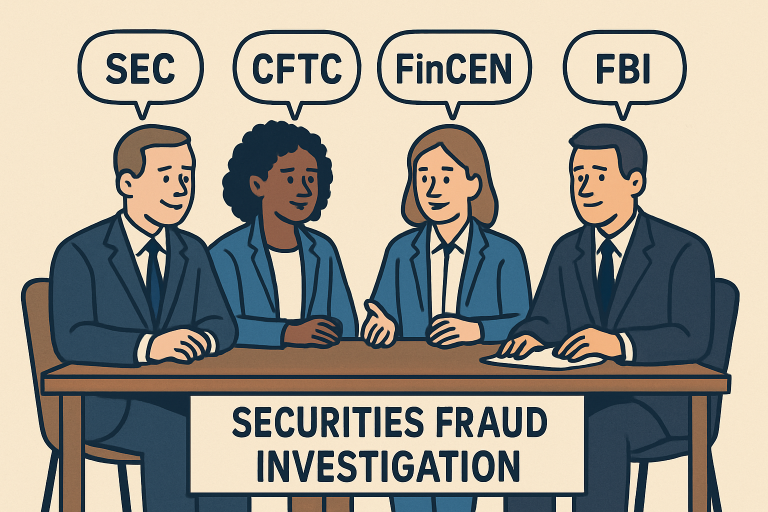
The threat of securities fraud remains a critical concern within the financial markets, eroding public trust and destabilizing investor confidence when left unchecked. Regulatory agencies play a crucial role in identifying, addressing, and prosecuting fraudulent practices, thereby preserving the integrity of the marketplace. Investors seeking accountability and justice often turn to trusted counsel, including investment fraud lawyers in New York, who help guide victims through complex legal and regulatory challenges while pursuing violators.
Securities fraud encompasses various deceptive practices, including insider trading, misrepresentation of financial statements, and market manipulation. Effective investigation and enforcement efforts are crucial for maintaining market transparency and deterring future misconduct that could have wide-ranging economic implications. Regulatory agencies operate concertedly, deploying diverse resources and robust methodologies to uncover fraudulent schemes and enforce existing laws.
With the rapid evolution of financial products, techniques for perpetrating fraud have become more sophisticated. Therefore, maintaining a proactive regulatory environment is critical for adapting to new threats and for safeguarding investor interests.
Understanding the processes and agencies involved in securities fraud investigations is crucial for both industry professionals and the investing public, underlining the need for ongoing education, transparency, and accountability across financial markets.
Key Regulatory Bodies and Their Roles
Multiple U.S. agencies function collaboratively to detect and combat securities fraud:
- Securities and Exchange Commission (SEC): As the federal agency overseeing securities markets, the SEC investigates insider trading, fraudulent disclosures, and other market abuses. Through rigorous oversight and enforcement, the SEC protects investors and maintains fair trading environments.
- Commodity Futures Trading Commission (CFTC): The CFTC is responsible for regulating derivatives markets, monitoring activities for manipulation and fraud in commodities, futures, and options.
- Financial Crimes Enforcement Network (FinCEN): Operating under the U.S. Department of the Treasury, FinCEN analyzes financial transactions to identify and take action against money laundering, including crimes that intersect with securities fraud.
- Federal Bureau of Investigation (FBI): The FBI investigates complex economic crimes, often collaborating with the SEC and other regulators to address large-scale frauds that affect investors nationwide.
Each agency brings specialized capabilities, resources, and authorities, creating a broad safety net against financial crime. Coordination among these agencies strengthens the fight against securities fraud and aids in data sharing and enforcement across jurisdictions.
Initiation of Investigations
Investigations may begin through several distinct channels:
- Whistleblower Tips: Insiders and other knowledgeable individuals provide critical leads by reporting suspected fraudulent conduct. The SEC’s Whistleblower Program, among others, offers substantial rewards and protections to incentivize whistleblowing.
- Market Surveillance: Regulatory agencies utilize advanced technology and analytical tools to monitor trading activity and detect suspicious or irregular patterns.
- Public Complaints: Investors and individuals who suspect misconduct can submit complaints to regulatory bodies, which may trigger reviews or comprehensive investigations.
This multi-stream approach ensures that red flags—whether detected algorithmically or through firsthand observations—reach enforcement personnel quickly and consistently. The ability to aggregate and analyze information from disparate sources enhances regulators’ ability to respond swiftly to both emerging and existing threats.
Investigative Procedures
- Information Gathering: Investigations typically begin with the collection of relevant documents such as emails, trading logs, and account statements to establish the context and scope of the suspected fraud.
- Interviews: Regulatory officials conduct formal interviews with key individuals, including whistleblowers, witnesses, and potential suspects, to obtain direct testimony that may confirm or refute suspicion of wrongdoing.
- Data Analysis: With expansive digital records and complex financial instruments, regulators leverage data analytics to flag discrepancies, reveal suspicious trades, or identify concealed relationships.
- Coordination with Other Agencies: Many sophisticated frauds span jurisdictions or cross into related regulatory spheres. Cooperation is facilitated through information exchanges and task forces that leverage both domestic and international resources.
Modern investigative approaches increasingly rely on technology to parse vast datasets, expediting discovery. Cross-jurisdictional collaboration enables more comprehensive enforcement, preventing fraudsters from exploiting regulatory gaps.
Enforcement Actions
Once evidence justifies action, multiple remedies are available:
- Civil Actions: Regulatory agencies can pursue monetary penalties, force defendants to return illicit gains, and seek court orders to halt ongoing violations.
- Criminal Prosecutions: Particularly egregious conduct may be referred to the Department of Justice for criminal prosecution, resulting in prison time, asset forfeiture, or substantial fines for individuals and organizations.
- Administrative Proceedings: Sanctions can include suspensions, revocation of professional licenses, or industry bans to prevent future misconduct by perpetrators.
Penalties serve as both deterrents and corrective mechanisms, with high-profile cases resulting in stringent sanctions that act as warnings to potential violators.
Recent Developments in Securities Fraud Enforcement
Ongoing regulatory innovation keeps pace with the evolution of market threats. For example, the U.S. Department of Justice’s recent launch of a whistleblower program significantly broadened protections and rewards for reporting on corporate criminal activity, reflecting growing recognition of whistleblowers’ critical contributions.
The use of machine learning, artificial intelligence, and expanded information sharing across agencies has further strengthened detection capabilities, enabling the rapid addressing of novel forms of fraud that are emerging in digital markets and decentralized finance.
Challenges in Securities Fraud Investigations
- Complexity of Financial Instruments: Many fraud schemes rely on advanced derivatives or market structures that require specialized expertise to unravel, increasing investigation duration and complexity.
- Jurisdictional Issues: Cross-border schemes present significant legal and procedural challenges, often requiring long-term collaboration with foreign regulatory counterparts.
- Resource Constraints: Limited staff and budget restrict the number and scale of cases agencies can pursue at any given time, despite increasing sophistication of malfeasance and a growing caseload.
Regulators must continually adapt to emerging challenges, advocating for legislative support, increased funding, and advanced analytical tools while balancing the growing volume of data and reporting requirements.
Final Thoughts
Through their comprehensive, coordinated, and adaptive investigations, regulatory agencies play a vital role in upholding market integrity and protecting investor interests. As financial markets continue to evolve, so do the resources and strategies employed in securities fraud investigations. Ongoing vigilance, effective reporting programs, and cross-agency collaborations ensure fraudulent conduct is swiftly uncovered and robustly prosecuted, helping preserve the public’s trust and participation in the global financial system.