


Key Takeaways
- The best condo choice depends as much on the building as on the individual unit.
- Compare total monthly costs, HOA operations, insurance, reserves, and building rules.
- Noise, views, natural light, parking, and elevator access can affect everyday comfort.
- A consistent scorecard helps buyers make a clear side-by-side comparison.
- Review association documents before the deadlines in the purchase contract expire.
Buying a condo in Downtown Austin means choosing both a private home and a shared residential community. Two units with similar square footage and asking prices can deliver very different ownership experiences because the building’s finances, rules, maintenance, access, and location all matter.
For buyers starting their search, Downtown Austin homes for sale from Noa Levy provide searchable condo and home listings along with area resources for Downtown and nearby central Austin neighborhoods. Noa Levy is an Austin real estate professional with a background in communication and strategic negotiation, making building-level guidance especially useful when comparing urban properties, where the details behind the listing can shape the decision.
Why the Building Matters as Much as the Unit
Condo ownership involves responsibility for a residence plus a shared interest in common areas, systems, and operations. That means the condition of elevators, garages, hallways, roofs, pools, mechanical equipment, and other shared features can influence both costs and quality of life. In a dense city center with residential towers, offices, entertainment districts, and public spaces, Downtown Austin’s mix of high-rise development and distinct districts also makes each building’s immediate setting important.
A new-looking lobby or a stylish amenity deck should not be treated as proof of strong management. Ask how the building is maintained, whether major repairs are planned, how often dues have changed, and how responsive the management team is to resident concerns.
Start With Lifestyle and Location
Before touring, make a short list of non-negotiables. Consider your commute, grocery routines, preferred restaurants, access to parks, transit needs, and how often you expect to drive. A building close to your daily destinations may be worth more to you than one with an extra amenity you will rarely use.
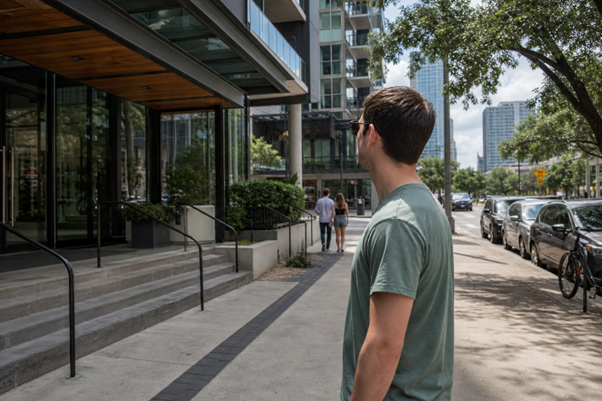
Also, evaluate the block, not just the tower. Street activity, nearby bars, special events, road congestion, loading zones, active construction, and late-night noise can vary considerably across Downtown. Visit at least once on a weekday and once on a weekend. If possible, spend time outside during the hours when you expect to be home.
Compare the Unit’s Layout and Condition
Look beyond staged furniture and decorative finishes. Assess whether the floor plan supports your routines: bedroom separation, work-from-home space, storage, closet placement, kitchen workflow, ceiling height, windows, and usable outdoor space. A well-designed smaller unit may function better than a larger unit with awkward circulation or limited storage.
During tours, inspect the apparent condition of flooring, appliances, plumbing fixtures, windows, doors, and HVAC equipment. Ask which items are included in the sale and whether there are any known repairs. A professional inspection can help identify concerns that may not be obvious during a brief showing.
Study Views, Light, and Privacy
A view of the skyline, lake, park, street, or a neighboring building can change how a home feels every day. Check the unit’s orientation, floor height, window coverage, and sightlines from living areas and bedrooms. Bright afternoon sun may be welcome to one buyer and uncomfortable to another, particularly in rooms with extensive glass.
Ask about vacant parcels, planned construction, and the likelihood that nearby development could alter views, light, or noise conditions. Tour at different times of day when possible, since morning light, traffic sound, and evening privacy can be difficult to judge from a single visit.
Calculate the Full Monthly Cost
The mortgage payment is only one part of condo ownership. Build a realistic monthly estimate that includes HOA dues, property taxes, unit insurance, utilities not covered by the association, parking charges, and a personal maintenance allowance. Keep room in the budget for unexpected repairs or a possible special assessment.
When comparing HOA dues, ask what they cover. Services may include building insurance, water, trash, security, concierge staffing, common-area upkeep, reserve contributions, or amenities. A lower fee is not automatically better if the association has limited reserves or if owners may face future costs for needed work.
Review HOA Financial Health and Documents
Request the association budget, balance sheet, reserve information, recent meeting minutes, insurance summary, governing documents, and details on current or planned projects. Review them for repeated repair issues, rising expenses, pending litigation, insurance changes, or discussion of assessments.
For Texas condo sales, a condominium resale certificate, governed by Texas Property Code Section 82.157, is prepared by the condominium association and provides key information related to the transaction. Read every document carefully and ask qualified real estate, legal, insurance, or lending professionals for guidance when a document raises questions.
Check Rules Before Making an Offer
Rules can vary widely between buildings. Confirm policies for pets, leasing, short-term rentals, rental caps, guest access, move-in scheduling, renovations, smoking, parking, storage, and use of common spaces. A restriction that seems minor during a tour may be significant if you plan to adopt a pet, rent the unit later, host frequent guests, or remodel.
Compare Amenities, Parking, and Access
Evaluate amenities based on actual use, not just appearance. Consider the fitness room, pool, lounge, roof deck, package area, coworking space, guest suite, and concierge services, then weigh their convenience against the operating costs reflected in dues. For some buyers, fewer amenities and lower recurring costs may be the better fit.
Confirm whether parking is deeded, assigned, leased, or shared, and ask about guest parking, EV charging, bicycle storage, package delivery, and loading access. Test elevator wait times and entry procedures during a busy period if possible. Verify whether a storage unit is included, separately purchased, or unavailable.
Build a Simple Condo Comparison Scorecard
Use the same one-to-five scale for every property so first impressions do not control the decision. After each tour, score:
- Location, walkability, noise, and daily convenience.
- Layout, condition, storage, light, views, and privacy.
- Total monthly cost, dues coverage, reserves, and insurance.
- Rules, management responsiveness, parking, access, and amenities.
- Likely resale appeal based on the unit and the building as a whole.
Common Buyer Questions
Is a newer building always the better choice?
Not necessarily. Newer buildings may offer modern finishes and amenities, but buyers should still examine construction quality, operating history, dues, management, and financial planning.
Should it be the top priority?
Views can add enjoyment and appeal, but they should be balanced with privacy, sunlight, noise exposure, future development, layout, and total ownership cost.
Final Decision Checklist
- Confirm the full monthly ownership estimate.
- Review association financials, rules, insurance, and meeting minutes.
- Verify parking, storage, pet, rental, and renovation policies.
- Visit the building and the surrounding area more than once.
- Compare at least two or three buildings using the same scorecard.
- Ask remaining questions before the inspection and contract deadlines pass.
Conclusion
The right Downtown Austin condo is not simply the unit with the best finishes or the lowest list price. It is the home in the building that fits your budget, habits, future plans, and comfort with shared ownership. A careful review of costs, documents, rules, access, and daily living conditions can turn a difficult comparison into a confident decision.