


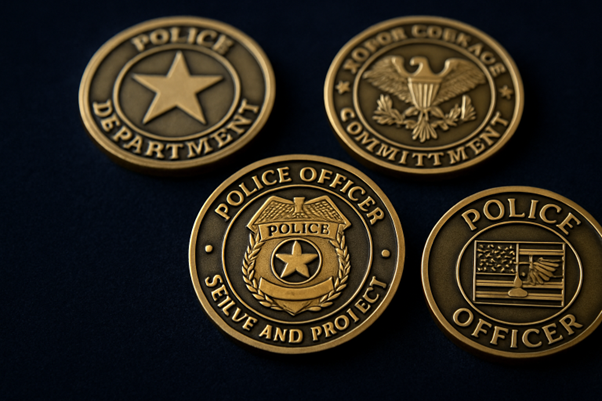
Within law enforcement, few symbols inspire as much pride and tradition as police challenge coins. These emblematic tokens are woven into the culture of officers and departments, serving as both keepsakes and reminders of the values that underpin the service. The practice of exchanging or awarding these coins not only upholds a legacy of camaraderie and recognition but continues to adapt to the evolving landscape of modern policing.
More than simple mementos, police challenge coins serve as tangible representations of the bond between officers and of the connection between police and the communities they serve. Their design elements, origins, and ongoing customization underscore their enduring importance in building morale, honoring service, and bridging tradition with innovation.
Origins of Police Challenge Coins
Challenge coins have a storied history, traced back to military tradition in World War I. American service members began carrying such insignias as tokens of identity and belonging, a custom that soon spread to other military branches and, eventually, to law enforcement. As veterans transitioned into police work, the tradition of carrying and bestowing challenge coins followed them, adapting to a new realm where unity, loyalty, and valor remained cornerstones.
Their transition into policing created a rich internal culture where coins not only represent an individual’s role in a department but also commemorate the heritage and evolution of each agency. Whether passed down through generations or crafted for specific squads, these coins root officers in a sense of shared history and honor.
Symbolism and Design Elements
Each police challenge coin is intentionally designed with symbolism. Department emblems, officer mottos, and distinctive shapes all serve to imbue coins with unique identities. For instance, a badge or shield design denotes official authority, while chosen colors, such as blue for loyalty or gold for distinction, highlight core values.
Some coins feature detailed inscriptions or three-dimensional reliefs, making each a token not just a story in itself. The attention to design ensures that recipients feel a deeply personal connection to the coin, reminding them of their role and responsibilities. More information about the history and cultural significance of challenge coins can be found on the National Police Association: Challenge Coins and the Lore of Law Enforcement Tokens.
Role in Building Morale and Teamwork
Morale and teamwork are central to effective law enforcement. Awarding challenge coins for exceptional acts, whether on the beat or in community initiatives, reinforces positive behavior and motivates officers. These recognitions become cherished milestones, often publicly acknowledged among peers, solidifying their status as tokens of shared victory or solidarity during difficult times.
Additionally, the act of bestowing coins fosters unity among officers, creating an environment where mutual respect and support are paramount. As symbols of collective achievement, challenge coins strengthen internal bonds, promoting collaboration and a sense of purpose within diverse teams.
Commemorating Special Events
Police departments frequently create special-edition challenge coins to honor significant events. For example, coins may be crafted to mark anniversaries, celebrate major case closures, or memorialize officers who have fallen in the line of duty. Recipients, families, and the wider department treasure these coins as lasting reminders of shared sacrifice and memorable accomplishments.
Enhancing Community Relations
Police challenge coins play an essential role beyond department walls. They are often presented to civilians who have gone above and beyond to help law enforcement or to participate in public safety initiatives. Distributing coins during community events or to young citizens fosters goodwill and cultivates trust between officers and residents, symbolizing a partnership committed to public welfare.
Modern Innovations in Challenge Coins
Modern challenge coins have evolved with technology. Some now incorporate Near Field Communication (NFC) chips or QR codes, allowing for instant digital interaction. Scanning the coin might connect recipients to the department’s mission statements, history, or charitable donation links. This innovation not only preserves tradition but also brings challenge coins into the digital age, facilitating broader engagement with both department members and the community. Additional examples of such technological impacts in law enforcement settings are discussed in Axios: “AI Drones Are America’s Newest Cops.”
Collecting and Preserving Challenge Coins
Collecting challenge coins is a profoundly meaningful practice for many officers and enthusiasts. Collections grow over a career, showcasing each coin as a milestone in professional journeys. Enthusiasts often display their coins in protective cases or shadow boxes, keeping them safe from sunlight and dust to maintain their integrity for generations. Proper preservation practices ensure that these coins retain both their physical and symbolic value.
Conclusion
From their wartime origins to modern digital iterations, police challenge coins remain symbols of honor and continuity in law enforcement. These tokens celebrate valor, promote teamwork, and enhance the relationship between officers and the communities they serve. As both artifacts of tradition and adaptable tools for the future, police challenge coins uphold the enduring values of commitment, unity, and public service.