


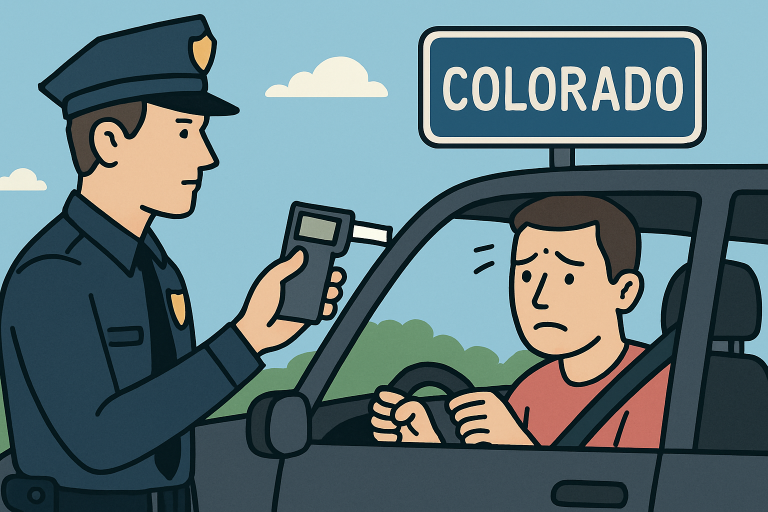
Colorado law takes a strict stance against impaired driving, and one of its key enforcement tools is the Expressed Consent Law. This law automatically applies to every driver on Colorado’s roads, making it vital for anyone behind the wheel to understand what’s at stake if they decline to take a breathalyzer or similar chemical test when requested by law enforcement. Failing to comply can result in complicated and lasting legal issues, impacting everything from your driving privileges to your financial security and even your criminal record. For a thorough breakdown of your rights and potential defenses, consulting a qualified attorney, such as those at martinlawfirmpc.com, can be invaluable if you’re facing a refusal situation.
Being armed with the facts about Colorado’s rules and the possible penalties for refusing a breath test not only protects your legal standing but also prepares you to make informed decisions during a high-pressure traffic stop. Refusal may seem like an option to avoid immediate consequences, but the aftermath is often far more severe than many realize.
Colorado’s Expressed Consent Law Explained
The Expressed Consent Law in Colorado mandates that any person operating a motor vehicle on the state’s public roads is deemed to have given “expressed consent” to submit to chemical testing (breath, blood, or urine) if an officer has reasonable grounds to believe they are under the influence of alcohol or drugs. The rationale is straightforward: by choosing to drive in Colorado, you automatically accept this obligation.
Upon being lawfully stopped, if a police officer suspects impairment, they are required to provide warnings about the consequences of refusing to take a test. Legally, drivers must promptly comply or face immediate administrative penalties that can be just as, or even more, detrimental than those following a DUI conviction. For additional details, the Colorado Department of Transportation provides an official overview of this statute and its implications.
Immediate Administrative Penalties for Refusal
The repercussions of refusing a breath test in Colorado are immediate and severe. For a first-time refusal, the Department of Motor Vehicles will automatically revoke your driver’s license for a minimum of one year, regardless of whether you are later convicted of DUI. If you have any prior test refusals or DUI-related offenses, the mandatory revocation period increases to two or more years. During these periods, you cannot legally drive unless you enroll in Colorado’s ignition interlock program.
Installation of an ignition interlock device (IID) is required for individuals seeking early reinstatement of their driving privileges, at their own expense. This device must be used continuously for up to two years for repeat refusals, with strict monitoring and compliance measures. Failing to meet these requirements can result in longer revocations and severe penalties if caught driving without proper authorization.
Criminal Implications of Refusing a Breath Test
While refusing a chemical test is not a criminal offense in itself, Colorado courts are allowed to inform juries that you refused testing. Prosecutors often use this fact to argue that the refusal was an attempt to hide intoxication. This strategy can increase the chances of conviction and lead to more severe legal outcomes. The court may also impose harsher sentences, justifying enhanced penalties due to the defendant’s perceived lack of cooperation.
Recent legal developments continue to shape how refusal cases are handled. A 2024 ruling by the Colorado Supreme Court clarified that, under certain circumstances, a suspect may revoke their consent and that a search warrant may be required for a blood draw. However, these rights are specific and limited, so refusing a breath test generally leads to substantial disadvantages during prosecution.
Designation as a Persistent Drunk Driver (PDD)
Refusing a chemical test in Colorado results, by statute, in a classification as a Persistent Drunk Driver (PDD), even if you have never been convicted of DUI before. This is a particularly damaging category, as it not only affects your criminal and administrative record but also imposes a host of additional requirements. Individuals branded as PDDs must complete substance abuse treatment, install an IID for a minimum of two years, and comply with extended periods of SR-22 insurance filings. The state monitors PDDs stringently, making it extremely difficult to escape the long-term ramifications.
Financial Consequences of Refusal
Refusing a breath test can have severe financial consequences. Your car insurance premiums will almost certainly rise dramatically, and you will be required to purchase SR-22 insurance, which certifies your financial responsibility to the state and is notoriously expensive. To restore your driving privileges, you’ll also need to pay reinstatement fees, comply with mandatory alcohol education, and undergo ongoing monitoring—all of which carry additional costs.
Many drivers underestimate these monetary penalties, focusing solely on the criminal side of a DUI. In reality, the cumulative price of refusal often exceeds even the fines associated with a first-time DUI conviction. Out-of-pocket costs can easily reach thousands of dollars over several years, excluding the lasting effects on your driving record and insurability.
Legal Defenses and Rights Regarding Refusal
Refusing a chemical test does not eliminate your right to contest the consequences. Certain circumstances, such as improper police procedures or lack of informed consent, may provide a defense. For example, if law enforcement failed to advise you of your rights properly or did not have sufficient justification to request a test, you may be able to challenge the suspension or use of your refusal in court.
It’s also worth noting that legal precedents shift frequently in this area. As mentioned, the 2024 Colorado Supreme Court decision regarding revocation of consent has added new complexities to defending refusal cases. Access to experienced legal counsel is crucial for navigating these evolving standards and maximizing your chances of a favorable outcome.
Conclusion
Refusing to submit to a breath test in Colorado can feel like a way to protect yourself during a DUI stop, but the law is structured to make refusal a risky and costly choice. Long-term license loss, mandated installation of ignition interlock devices, potential branding as a Persistent Drunk Driver, and lingering financial setbacks combine to create a set of consequences tougher than many drivers anticipate. When in doubt, it is generally more prudent to comply with testing than to accept the heavy administrative and legal penalties of refusal.
Always consult with a qualified attorney to ensure your rights are protected, and you fully understand the impacts of your decisions. Staying informed is the best approach to avoiding the compounding consequences of a test refusal under Colorado’s strict DUI enforcement regime.