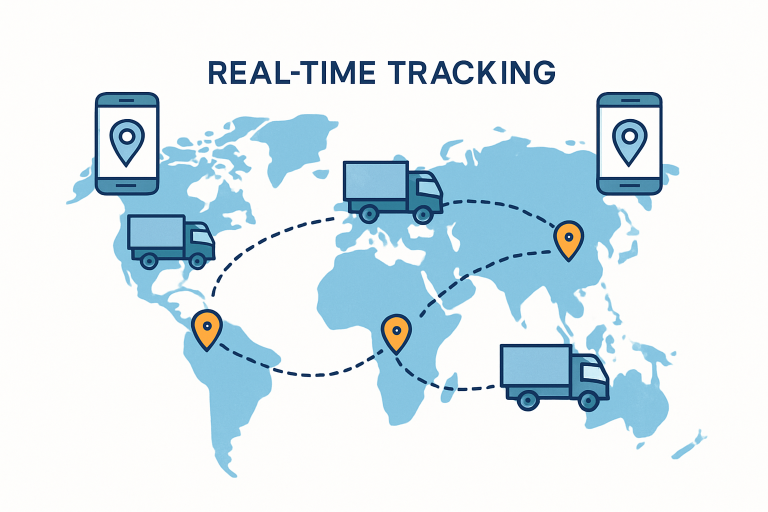
Enterprises today are operating in an era where data drives every competitive edge. Relying on timely, accurate insights has proven essential for managing complex supply chains and delivering outstanding customer service. One cornerstone driving these changes is real-time tracking, a technological leap that provides live, actionable data on assets, inventory, personnel, and processes. As evolving visibility trends in logistics continue to shape how organizations manage their resources, forward-thinking companies are embracing enterprise-grade tracking to create agile, resilient operations that quickly respond to market demands.
Staying ahead in today’s marketplace means implementing solutions that solve immediate challenges and offer a foundation for continuous improvement and innovation. Real-time tracking enables organizations to make proactive decisions, anticipate challenges before they escalate, and realize new efficiencies across every facet of their business. The benefits extend beyond the warehouse, influencing everything from transparency to customer satisfaction.
Enhancing Supply Chain Visibility
Real-time tracking technology is revolutionizing the way companies oversee their global supply chains. Businesses now benefit from accurate, live location data for shipments as they move from supplier to end customer. This level of visibility reduces uncertainty and enables partners to collaborate seamlessly. Furthermore, when disruptions occur—such as weather delays, port congestion, or equipment failures—having complete visibility allows enterprises to reroute shipments dynamically and notify stakeholders instantly.
This transparency addresses lost shipments, delivery delays, and insufficient inventory management. Companies that leverage these insights can deliver on customer promises and strengthen their reputations as reliable partners. Blind spots no longer constrain enterprises; instead, they are empowered to continuously optimize both upstream and downstream logistics.
Optimizing Operational Efficiency
Active oversight of assets, vehicles, and employees is critical to maximizing productivity and minimizing wasted resources. Real-time tracking platforms offer continuous monitoring that streamlines core operations by:
- Enhancing asset utilization rates through improved scheduling
- Reducing downtime resulting from misallocated or underused equipment
- Enabling faster, data-driven decision making when issues arise
Organizations using these tools can adjust transportation schedules in response to traffic in real time, dispatch maintenance teams when anomalies are detected, and allocate resources according to demand—all without manual intervention. According to a Financial Times report, companies with real-time visibility tools often see a marked reduction in lost productivity and substantial improvements in operational agility.
Improving Customer Experience
Modern consumers value fast delivery and demand transparency throughout the order fulfillment process. Real-time tracking lets companies provide pinpoint delivery times and proactive updates, minimizing customer uncertainty. Businesses build trust and encourage repeat purchases by keeping customers informed at every stage.
This proactive transparency has an additional advantage: customer support teams can shift their focus to more strategic service improvements by reducing the need for status inquiries. These efforts culminate in measurable customer loyalty and public perception gains, turning operational accuracy into a competitive differentiator. According to Harvard Business Review, companies leveraging smart, connected products cultivate greater emotional connections with their users.
Leveraging IoT and AI
The convergence of IoT and AI is magnifying the benefits of enterprise tracking. IoT sensors generate a deep well of continuous data on location, temperature, shock, etc. AI algorithms scrutinize these streams to identify inefficiencies, predict disruptions, and automate workflows. This methodology transitions businesses from reactive to predictive strategies.
Proactive Problem-Solving
For example, when temperature-sensitive goods are shipped, sensors alert logistics teams before a spoilage event, giving them time to intervene. Fleet managers harness predictive maintenance to prevent vehicle breakdowns, minimizing repair costs and fleet downtime. AI’s capacity to transform sensor data into intelligent recommendations keeps enterprises ahead of disruptions, adapting seamlessly to a dynamic business environment.
Cost Savings and Risk Mitigation
Organizations increasingly view real-time tracking not just as a tool for efficiency, but as a central pillar of risk management and cost control. Accurate, around-the-clock asset tracking dramatically reduces losses caused by theft, misplacement, and damage. Optimized delivery routes slash fuel expenses and overtime labor costs, leading to leaner logistics operations.
This comprehensive risk management also extends to compliance. Tracking systems document the chain of custody for regulated goods, safeguarding against costly regulatory fines and loss of customer confidence. By anticipating—and mitigating—risks, enterprises create more predictable, stable operations and enhance overall profitability.