Car trouble can strike anyone, no matter how new or well-kept their vehicle is. Being ready for a roadside emergency isn’t just about convenience; it’s about protecting yourself and your passengers. Having the proper knowledge and supplies on hand can help you reduce stress and stay safe if your car breaks down unexpectedly. For additional support, trusted providers like AAA Roadside Assistance are available. You can visit https://mwg.aaa.com/automotive/roadside to see how they can help you get back on the road quickly.
Planning, keeping up with routine maintenance, and knowing how to respond when your vehicle stops working can save you time, money, and unnecessary frustration. This guide walks you through key steps to ensure you’re prepared to handle any roadside situation confidently and safely.
Regular Vehicle Maintenance
The most effective way to reduce the risk of unexpected breakdowns is to stay proactive with vehicle maintenance. Check fluid levels, including oil, brake fluid, and coolant, at least once a month. Inspect your tires regularly for signs of wear, damage, or low pressure to prevent blowouts or flats that could leave you stranded. If you notice dashboard warning lights or unusual noises, address them promptly to prevent a breakdown. For a comprehensive guide on maintaining your vehicle, including tips on repairs, detailing, and routine upkeep, Car and Driver offers an excellent resource.
Regular battery checks are essential as batteries can die without warning, especially in extreme temperatures. If your car struggles to start, have a mechanic check your battery and charging system right away.
Building an Emergency Kit
Even with meticulous maintenance, emergencies still happen. Building a comprehensive emergency kit ensures that you’ll have what you need to handle most situations safely and with minimal stress. Key items to include are:
- First aid supplies
- Jumper cables
- Flashlight with extra batteries
- Non-perishable snacks and bottled water
- Warm blanket and extra clothing
- Basic tool set or multi-tool
- Reflective safety vest
- Phone charger (car adapter)
- Tire inflator or sealant
Review the contents of your kit every six months to replace expired goods and swap out seasonal items, such as adding an ice scraper and hand warmers for winter.
Safe Handling of Breakdowns
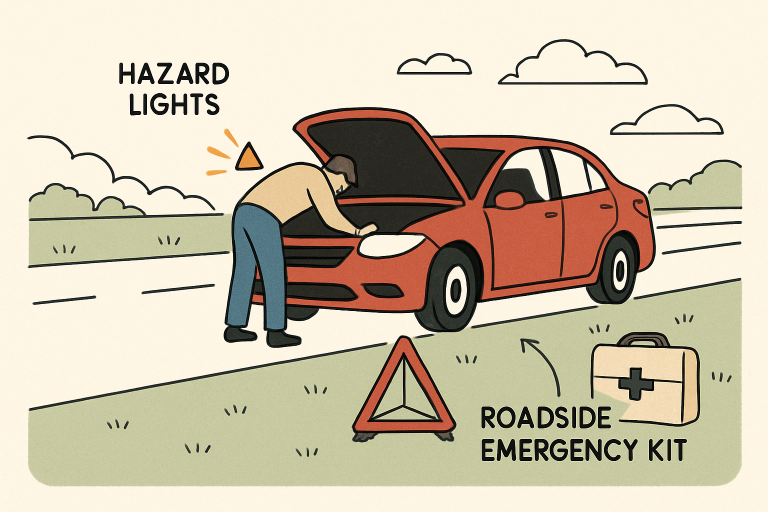
When your car breaks down, safety should always be your top priority. If possible, move your vehicle to the right shoulder or a safe area well clear of traffic. Turn on your hazard lights immediately to alert other drivers. If you cannot move your car, stay inside with your seatbelt fastened and doors locked until help arrives, unless you are in immediate danger. Remember, stepping out of your vehicle on a busy highway or in poor visibility conditions puts you at significant risk. Only exit your car if you are certain it is safe to do so and preferably from the side away from active traffic.
Staying Visible and Safe
Maximizing your visibility is crucial—especially at night or in poor weather. Set out reflective triangles or LED flares several feet behind your vehicle to warn oncoming drivers of your presence. Wear a reflective vest if you need to leave the vehicle. Proper visibility measures can reduce secondary accidents on the roadside. Keep your vehicle’s hazard lights on until help arrives.
Contacting Roadside Assistance
Make sure you have contact details for roadside assistance services saved in your phone and written down in your glove compartment. Membership in your auto insurance provider’s emergency roadside assistance program ensures professional help is just a call away if you need a tow, tire change, or other assistance. Don’t hesitate to dial 911 if your situation is dangerous or blocking traffic. Always communicate your location as precisely as possible using mile markers, GPS coordinates, or nearby landmarks so that responders can reach you quickly and efficiently.
Seasonal Preparations
Every season brings unique hazards on the road. In winter, stock your vehicle with an ice scraper, snow shovel, sand or cat litter for traction, and extra warm clothing. During warmer months, keep sunglasses and sunscreen readily available and ensure your coolant system is functioning correctly to prevent overheating. For comprehensive, season-specific safety tips, the Consumer Reports Guide on Keeping Your Car in Great Shape offers step-by-step advice on updating your car emergency kit and adjusting maintenance practices throughout the year.
Educating Passengers
Take a few minutes before each trip to show your passengers where the emergency kit is stored and brief them on what to do if you break down. Older children and adults should know how to exit safely, use the emergency kit, and make emergency calls if you are unable to assist. Instructing everyone in the car about proper safety procedures and where to find necessary supplies not only keeps everyone calm but also accelerates the response in an emergency.
Conclusion
While no one hopes to experience a vehicle breakdown, it pays to be prepared. Regular vehicle maintenance, a thoughtful emergency kit, clear safety procedures, and informed passengers can make all the difference. Use these practices every time you hit the road so that, if trouble arises, you’ll be ready with calm confidence and the right tools for the job.