Modern homeowners are increasingly searching for ways to blend style with sustainability in their outdoor spaces. Sustainable landscaping is not only an eco-friendly choice but also a way to boost curb appeal and create enjoyable outdoor environments. By integrating careful planning and responsible practices, properties can look beautiful while remaining mindful of the environment. For those looking to transform their own landscapes with purpose, exploring professional garden design in The Plains, VA, can be a great starting point to implement practical and aesthetic solutions.
From selecting native vegetation to using innovative water systems, sustainable landscaping goes beyond plant choice. It encompasses design strategies, material selection, and the purposeful creation of spaces that offer a respite from daily routines. As these trends continue to evolve, homeowners are finding new ways to make sustainability a central theme in their yard design and maintenance routines. This not only helps protect local resources but also provides a modern, welcoming aesthetic.
Another essential aspect of eco-friendly landscaping is its positive long-term impact. Sustainable choices decrease maintenance needs, save money on utilities, and support thriving local ecosystems. According to the U.S. Environmental Protection Agency (EPA), such methods can even reduce air and water pollution, further underscoring their importance.
As these ideas gain traction, inspiration from real-world sustainable landscaping projects can spark creativity. With a thoughtful approach, today’s outdoor spaces become greener, more resilient, and tailored to both the homeowner’s lifestyle and environmental responsibility.
Embracing Native and Drought-Tolerant Plants
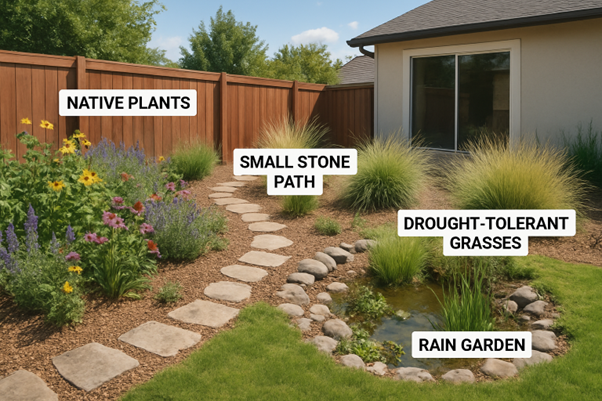
Selecting plants that are native to your region is one of the most effective sustainable landscaping strategies. These plants are naturally suited to local climate and soil conditions, so they require far less water and maintenance than exotic alternatives. In areas with limited rainfall, drought-tolerant plants such as lavender, ornamental grasses, agave, or cacti can thrive while conserving precious water resources. As highlighted by the Homes & Gardens guide to sustainable garden landscaping, native species also provide vital habitat and food for pollinators, birds, and beneficial insects.
Building your garden with indigenous, robust flora not only minimizes labor and water costs but also protects local biodiversity. Thoughtful placement and layering ensure a dynamic landscape that changes with the seasons while thriving on minimal input.
Incorporating Recycled and Natural Materials
Choosing recycled or natural materials for landscaping projects adds both environmental value and bespoke character to your outdoor space. Repurposed wood, recycled plastic edging and deck boards, reclaimed stone masonry, and crushed glass paths all prevent waste from ending up in landfills. These elements can be incorporated into garden beds, patios, walkways, and fences, giving each project a unique signature and a lighter environmental footprint.
The use of local stone or salvaged bricks ensures that building materials are durable, beautiful, and earth-friendly. This trend is gaining momentum, as seen across many landscape architecture showcases and recommended by HGTV’s guide to eco-friendly landscaping ideas for modern homes.
Implementing Smart Irrigation Systems
Traditional irrigation often leads to excessive water consumption and runoff. Modern solutions include weather-responsive controllers and soil moisture sensors that ensure watering only occurs when truly necessary. These systems can automatically adapt to rainfall, humidity, and plant needs, which significantly cuts waste and utility costs.
Smart irrigation technologies can be programmed for targeted plant groups, ensuring each area receives the precise amount of water it needs to thrive. This not only protects the landscape from drought but also helps maintain the health of the garden ecosystem.
Adopting Organic Lawn Care Practices
Adopting an organic approach to lawn care means eliminating synthetic pesticides and fertilizers. Instead, homeowners are turning towards compost, natural mulch, and biological pest management. These methods enrich the soil with organic matter, creating a robust ecosystem that supports healthy, resilient grasses and plants.
Organic lawns naturally build resistance to disease and pests over time, minimizing the need for intervention while remaining safe for pets and children. Regular aeration, organic topdressing, and overseeding with native grass blends are essential techniques for a lush, sustainable lawn.
Designing with Water Conservation in Mind
Reducing water consumption is a prevailing principle in modern landscape design. Features such as rain gardens, swales, permeable paving, and strategically graded lawns help capture precipitation and channel it where it is needed most. Drought-tolerant groundcovers or hardscaping can add texture and contrast, making spaces feel lush without relying heavily on irrigation.
Layered planting designs and mulching also retain soil moisture, shield roots from harsh sun, and provide natural weed suppression. Such design strategies create a resilient landscape that can adapt to unpredictable weather and ongoing climate change.
Creating Outdoor Wellness Spaces
Today’s landscapes are also being transformed into wellness sanctuaries. Elements such as meditation gardens, outdoor yoga decks, and spaces for quiet reflection offer a natural escape from daily stress. Soothing soundscapes using water features, fragrant plantings, and gentle lighting encourage relaxation and foster a deep connection with nature.
Designing outdoor rooms for wellness can be highly personalized, reflecting the interests and lifestyles of those who use them. Whether it is a firepit for gatherings or a secluded nook for reading, these spaces turn the garden into a daily retreat that nurtures both mental and physical well-being.
Conclusion
With careful planning, sustainable landscaping enhances both the visual appeal and ecological health of modern properties. Native plants, recycled materials, smart irrigation, organic maintenance, and wellness-minded design all contribute to lasting beauty, lower resource usage, and a healthier environment. Homeowners who embrace these strategies create inviting outdoors that serve their family, community, and the planet for years to come.